Obama gambles success on strategy
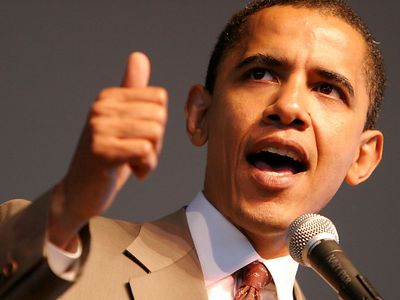
This week an ambitious President Obama continues his move from what he must do (the economy, Iraq) to what he wants to do (healthcare, energy policy) and what he’s judging that he must do again, and again (AIG is the latest back at the federal till).
Using that sky-high popularity for what it’s worth (and then some), Obama is pressing ahead in a brash style, telling his opponents he’s ready for battle, calling them on hypocritical statements as quickly as they’re doing the same to him, and choosing more fronts, not fewer.
This is what he was elected to do -- though not necessarily all at once.
Now, piece by piece, Obama is taking ownership of problems he inherited -- not just from his immediate predecessor, but from decades of calcified politics that couldn’t deliver breakthroughs on the biggest issues of the era.
The pile-it-on strategy (just last week, remember, he said he was ending the war, fixing the financial meltdown, and curing cancer) signals an early evolution for a president who’s struggled with his own definitions of bipartisanship and effective governance.
More than ever, he looks like a president who will succeed spectacularly or fail miserably.
How much is too much?
“Achieving Mr. Obama’s agenda, or even a substantial part of it, will require extraordinary responsiveness not only from his team, but also from Congress and the public,” John Harwood writes in The New York Times. “Each of Mr. Obama’s major initiatives might normally represent the work of an entire session of Congress. Mr. Obama’s only apparent deference to overloaded circuits so far was his decision to slow his initial push for Social Security solvency, which rattled Democratic liberals.”
“Perhaps the only things as high as Obama's goals are the hurdles they must clear,” writes the AP’s Chuck Babington. “While tackling the economic crisis, he is asking Congress to enact contentious measures that have been debated, but not decided, in calmer times: cut subsidies for big farms; combat global warming with a pollution tax on industries; raise taxes on the wealthy; make big changes to health care, including lower reimbursements for Medicare and Medicaid treatments and prescription drugs.”
“Battle lines are rapidly hardening over the broad policy shifts, massive deficits and tax increases President Obama unveiled last week in his first budget request, a 10-year spending plan thick with political friction points,” Lori Montgomery writes in The Washington Post.
posted by Free free everything @ 8:23 AM
0 Comments


